Proving What You've Earned: How US Employers Are Learning to Verify Japanese Credentials
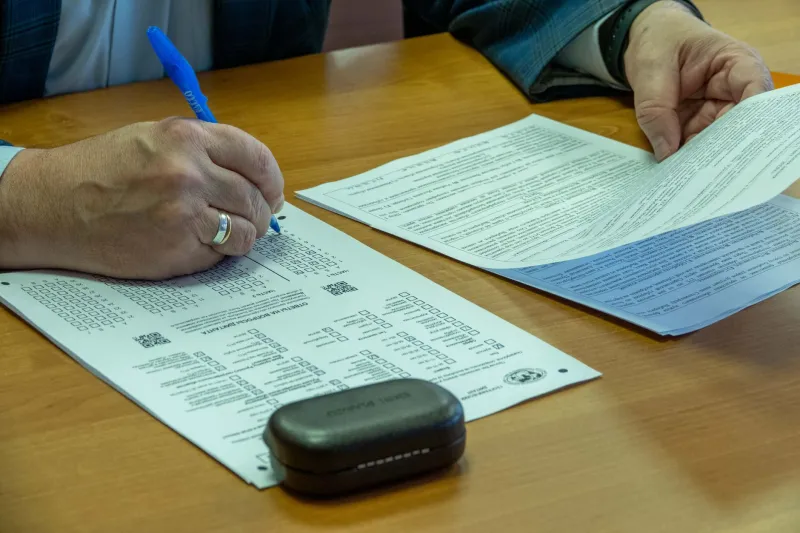
A candidate walks into an interview with a resume listing a Japanese national certification — perhaps the Information Security Management Examination issued by Japan's Information-technology Promotion Agency, or a Certified Skilled Worker designation from the Ministry of Health, Labour and Welfare. The hiring manager is intrigued. The credential appears legitimate. But how does the company actually confirm it?
For many US employers, the honest answer is: they can't — at least not easily. This verification gap has quietly become one of the most significant friction points in the growing adoption of Japanese shikaku within American hiring frameworks. Understanding why the problem exists, and how it is being addressed, matters both for employers building trust mechanisms and for professionals who want their credentials to count.
Why Verification Is Harder Than It Looks
Japanese credentialing bodies operate within a domestic administrative infrastructure that was not designed with international employers in mind. Unlike some European qualification frameworks, which have invested heavily in cross-border recognition systems, Japan's credential ecosystem remains largely inward-facing. Most official verification portals are published in Japanese, require a domestic address or tax identification number to access, or simply do not offer the kind of real-time lookup functionality that US background-screening firms expect.
This creates an asymmetry of information. A Japanese candidate knows exactly what their credential represents — the examination body, the difficulty tier, the industry recognition it carries. A US hiring manager, by contrast, may have no reliable way to distinguish an authentic Ministry-issued certification from a certificate issued by a private training provider with no regulatory standing whatsoever.
The problem is compounded by translation. When credential titles are rendered into English on a resume, nuances disappear. A "Certified Electrical Engineer" designation in Japan carries specific statutory meaning under the Electrical Appliances and Materials Safety Act. Stripped of that context on an English-language CV, it can look indistinguishable from any number of domestic or international engineering certificates.
The Fraud Risk Is Real, But Often Overstated
Outright credential fraud — the deliberate fabrication of a Japanese shikaku — does occur, but security professionals and HR consultants who work across the Pacific tend to characterize it as less common than credential misrepresentation: the inflation of a partial qualification, the omission of expiration dates, or the conflation of a training course certificate with a nationally recognized examination credential.
Nonetheless, the perception of risk shapes employer behavior. Companies that have been burned by unverifiable claims — even once — tend to apply blanket skepticism to all foreign credentials. That skepticism, however reasonable from a risk-management standpoint, has the unintended consequence of disadvantaging candidates who hold entirely legitimate qualifications.
For professionals who have invested significant time and money earning Japanese credentials, this is more than an inconvenience. It is a structural barrier to career advancement.
What Verification Infrastructure Currently Exists
Several pathways for authenticating Japanese credentials do exist, though none offers the seamless experience that US employers are accustomed to with domestic certifications.
Direct issuing body contact. Japan's major national credentialing authorities — including the Japan Examination for Healthcare Professionals, the Financial Services Agency for securities licenses, and IPA for IT certifications — will respond to written verification inquiries. Response times vary, and correspondence typically requires Japanese-language communication or the assistance of a bilingual intermediary.
Apostille certification. For credentials that need to cross legal boundaries, Japan is a signatory to the Hague Apostille Convention. An apostille attached to an official certificate or certified transcript confirms the authenticity of the issuing authority's signature and seal. While this does not verify the content of the credential itself, it provides a meaningful layer of documentary legitimacy that US legal and compliance departments can work with.
Academic credential evaluation services. Organizations such as World Education Services (WES) and Educational Credential Evaluators (ECE) primarily assess educational qualifications, but some have expanded their scope to include professional credentials. Their reports translate the foreign qualification into a US equivalency framework, which many employers find actionable even when they cannot independently verify the original document.
Employer-commissioned background screening. Firms specializing in international background checks — including branches of large providers like Sterling and First Advantage — have developed Japan-specific verification workflows. These typically involve domestic Japanese research partners who can access local databases and conduct in-country inquiries on a client's behalf.
Emerging Solutions: Digital Badges and Blockchain Verification
The most consequential shift on the horizon is the gradual digitization of credential issuance within Japan itself. Several of the country's major examination bodies have begun piloting digital credential systems that generate verifiable, tamper-evident certificates linked to a candidate's registered identification. These digital credentials can be shared directly with employers via secure links, eliminating the document-authentication chain entirely.
Blockchain-based credentialing platforms have attracted particular attention. By recording credential issuance on a distributed ledger, these systems allow any employer anywhere in the world to confirm authenticity without contacting the issuing body at all. While adoption within Japan's credentialing infrastructure is still nascent, the trajectory is clear: within the next several years, a meaningful portion of Japanese national certifications will be verifiable in seconds rather than weeks.
Third-party platforms operating in the credential-wallet space — including Credly and Accredible, both of which have established relationships with Asian credentialing organizations — are also expanding their Japanese partnerships. As more shikaku-issuing bodies onboard these platforms, the verification burden on US employers will decrease substantially.
What Professionals Can Do Today
Until these systemic solutions mature, the verification burden falls disproportionately on the candidate. Professionals holding Japanese credentials who are targeting US employers should take several concrete steps to strengthen their credibility.
First, obtain original documentation in the most official form available — ideally with an apostille if the credential will be used in a formal employment or licensure context. Second, prepare a concise credential summary document that identifies the issuing authority, the examination body, the legal or regulatory basis for the credential, and a direct contact or website for verification inquiries. Third, consider engaging an academic credential evaluation service to produce a formal equivalency report, even if the credential is professional rather than academic in nature.
Finally, and perhaps most importantly, be prepared to explain the credential in context. US employers who are unfamiliar with Japanese shikaku are not being unreasonable when they ask follow-up questions. A candidate who can articulate what the credential represents — the examination structure, the pass rate, the industry standing — transforms a verification challenge into a demonstration of subject-matter expertise.
The Employer's Responsibility
The verification problem is not solely a candidate issue. Companies that are actively recruiting professionals with international experience have a corresponding obligation to build internal competency around foreign credential evaluation. This means investing in HR training, establishing relationships with international background-screening partners, and developing standardized protocols for assessing non-domestic qualifications.
Organizations that do this work gain a meaningful recruiting advantage. Candidates with verified Japanese credentials represent a talent pool that many competitors are overlooking precisely because the verification process feels difficult. The friction, in other words, creates opportunity for employers willing to engage with it.
As Japan's credentialing infrastructure continues to modernize and as third-party validation solutions become more widely available, the current verification gap will narrow. The employers and professionals who understand this trajectory — and position themselves accordingly — will be best placed to benefit when it does.