Stack, Specialize, Advance: How Japanese Micro-Credentials Are Outpacing the MBA in Career Value
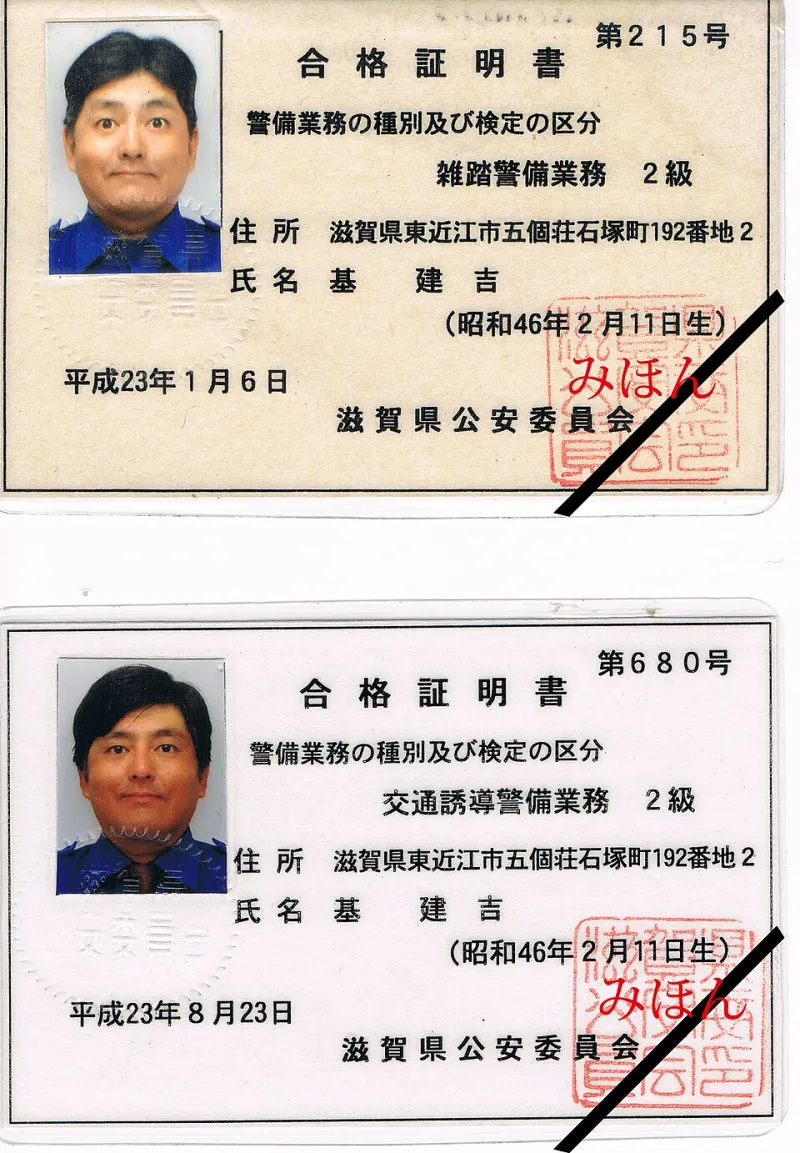
Photo: Japanese professional certification exam study documents stacked on desk, via image1.slideserve.com
The MBA has long occupied a near-mythological status in American professional culture. It signals ambition, signals networks, signals a certain willingness to sacrifice two years and anywhere from $60,000 to $200,000 in pursuit of career elevation. Yet a quiet shift is underway—one that originates not in Silicon Valley or on Wall Street, but in the credentialing culture of Japan.
Across industries from manufacturing to information technology to finance, Japanese employers have for decades prioritized what might be called the shikaku stack: a portfolio of narrow, demonstrably rigorous certifications that, when assembled deliberately, signals depth of expertise rather than breadth of academic exposure. For US professionals watching tuition costs climb and ROI timelines stretch, this model deserves serious attention.
The Architecture of Japanese Credentialing
Japan's credentialing landscape is unusually structured. The national government, through ministries such as the Ministry of Economy, Trade and Industry (METI) and the Ministry of Health, Labour and Welfare (MHLW), administers or formally recognizes hundreds of qualifications spanning technical trades, professional services, and knowledge industries. These are not informal certificates issued by private bootcamps. Many carry legal weight—certain roles legally require specific shikaku for practitioners to operate.
This institutional backbone creates a credibility floor that most Western micro-credentials simply cannot match. When a Japanese IT engineer holds the Information Technology Passport Examination (ITパスポート) alongside the Applied Information Technology Engineer Examination (応用情報技術者試験), those credentials arrive with government endorsement, standardized pass rates, and decades of employer familiarity. Hiring managers in Japan—and increasingly, multinational firms operating across borders—treat them accordingly.
Stackability as Strategy
What makes Japan's micro-credential model particularly relevant for US professionals is its intentional stackability. Unlike an MBA, which is largely a monolithic credential, Japanese shikaku are designed to be accumulated in sequences that signal career progression. An entry-level IT professional might begin with the ITパスポート, progress to the Fundamental Information Technology Engineer Examination (基本情報技術者試験), and then pursue specialty credentials in database administration, embedded systems, or network architecture—each step demonstrating not just knowledge, but a documented commitment to deepening expertise.
For American workers, this architecture offers something the graduate school pipeline often does not: granularity. Rather than spending two years in a generalist program, a mid-career professional can invest six to twelve months acquiring a credential that speaks directly to a specific skill gap—and then repeat the process as industry demands evolve.
Which Credentials Carry Equivalent or Greater Weight?
Not all micro-credentials translate equally across cultural and industry contexts. US professionals should focus on shikaku that have achieved meaningful recognition among multinational employers, particularly those with Japanese parent companies or significant operations in Japan. Several stand out:
Information Technology Engineer Examinations (IPA Series): Administered by Japan's Information-technology Promotion Agency, this suite of credentials is recognized across Asia and increasingly referenced by multinationals hiring for technical roles. The higher-tier examinations—particularly the IT Architect and IT Strategy Manager qualifications—are viewed by many employers as equivalent in rigor to a master's-level specialization.
Certified Skilled Worker of Financial Planning (ファイナンシャル・プランニング技能士): Japan's government-recognized financial planning credential operates across three levels and is taken seriously by financial services firms operating in both markets. US professionals already holding CFP designation may find that adding this credential opens doors in Japanese-affiliated wealth management firms.
Quality Management and Reliability Engineer Credentials (品質管理検定 / QC検定): For manufacturing and operations professionals, Japan's quality management certifications carry weight that reflects the country's global reputation for production excellence. In US facilities operated by Japanese manufacturers—Toyota, Honda, Panasonic, and dozens of others—these credentials are understood at a granular level that generic quality certifications are not.
Project Management Credentials via PMAJ: While the US-based PMP from PMI is globally recognized, Japan's Project Management Association of Japan (PMAJ) offers the Program Management Architect (PMA) and related credentials that signal familiarity with Japanese project methodologies—a meaningful differentiator when working in or with Japanese corporate environments.
The Financial Calculus
The cost comparison is stark. A top-tier MBA program in the United States averages well over $100,000 in tuition alone, with opportunity costs pushing the total investment significantly higher. Japanese national examination fees, by contrast, typically range from ¥5,000 to ¥20,000 per sitting—the equivalent of roughly $35 to $135 at current exchange rates. Even accounting for preparation materials, language study if required, and potential travel for in-person examinations, a well-chosen shikaku stack can be assembled for a fraction of the cost of a single graduate semester.
The time investment is similarly compressed. Many examination cycles occur twice annually, with preparation windows of three to six months considered standard for motivated candidates. A professional who commits to one or two credentials per year can build a substantive portfolio within the span of a typical MBA program—while continuing to earn, contribute, and accumulate practical experience simultaneously.
Practical Entry Points for US Professionals
For Americans without prior exposure to Japan's credentialing system, the learning curve is real but manageable. Several entry points exist that do not require Japanese language proficiency, particularly within IT and quality management sectors where English-language resources and examination materials are available through affiliated international bodies.
Professionals with Japanese language skills—even intermediate proficiency at the JLPT N3 level or above—have access to a significantly wider range of shikaku and will find that the combination of language certification and industry credentials creates a particularly compelling profile for multinational employers.
The strategic approach mirrors the Japanese credentialing philosophy itself: start narrow, demonstrate competency, and stack deliberately. Identify the specific industry context in which recognition is most likely, research the credential hierarchy within that domain, and build a preparation timeline that treats each examination as a milestone rather than a destination.
Rethinking the Default
The MBA is not obsolete. For professionals seeking general management exposure, alumni networks, or brand-name affiliation, it retains genuine value. But for the US professional who needs to demonstrate current, specific, verifiable expertise—quickly and affordably—Japan's micro-credential ecosystem offers a model that the American market has been slow to fully appreciate.
The shikaku approach asks a different question than the graduate degree: not where did you study? but what, precisely, can you do? In a hiring environment that increasingly demands proof over pedigree, that question is becoming harder to ignore.